Wednesday, October 26, 2011

Hyperbole in Idioms (Entry 7+1)

    Bored with the step by step: read, identify, report structure of my work for the journal, I think I should somehow introduce something new.
    Taking into consideration that a lot of the exaggerations are actually idioms that are widely used, I figured a new think I could do:
1. Find a list of idioms; - There are many online, but I'll just take one of the richer ones and work with it, even if it's missing many.
2. Start identifying which are exaggerations of literal actions;
3. Find or state an example of it being used;
4. Extras - No idea... But I should have some additional "step" for more interpretations, comments etc.

    How is this going to work?
    Here's the list that I will be using.

    I dislike always going alphabetically, so I'll start the other way around, i.e. backwards.

A yoke around one's neck;
Meaning: an obligation, commitment or restraint that becomes an oppressing burden.
It's not really this locked around your collum


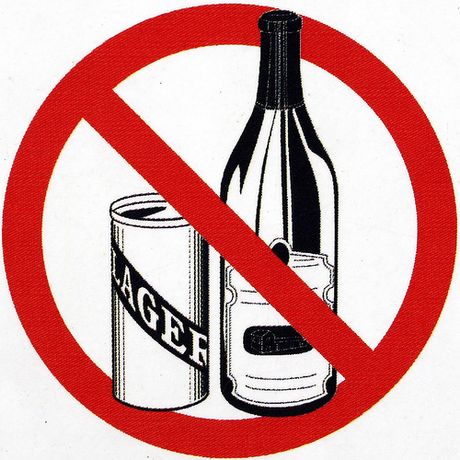
On the wagon
meaning: to refrain from alcohol, to quit drinking it


Walking on air
Meaning: very happy, excited, "floating from happiness"

There you go, so much for now! That's just a mere median of how exaggerated idioms can get.

Saturday, October 22, 2011

Hyperbole that makes beauty (ENTRY 6+1)

Your hateful words sear my soul like a branding iron. The abuse I have to endure make my blood boil. Every slap or punch makes me sink away into my dark lonely soul. When you apologize the feeling never reaches your eyes, as though you don't care. I hide my tears and pain while I watch your life tick away. I am a ticking bomb ready to strike your weak point.....
You longer live and breathe to enjoy my pain.

    The first thought on my mind after reading this was: whoever wrote this is soooo down or blue.
    Then I clicked the link that leads me to the author's profile on the page I took this from, only to read the short description: "I write depressing music and poetry the best. I'm not depressed or anything it's just so easy for me to write dark thoughts."
   Reading this helped me make up my mind in regards to whether the strong exaggeration was to express strong emotions, to make a vivid description, or both. Considering that it wasn't candid, but solely artificial, and written for the sake of it being beautiful, it is safe to conclude that it is most fitting for 6, 7 and 8 from the purpose list.
   So, simply for the sake of clarity:
   1.Your hateful words sear my soul like a branding iron.

Really now? The person who the author speaks off most definitely didn't stamp this to her spirit!


2.The abuse I have to endure make my heart boil.
Boiling blood
The grammar error is not the only inaccuracy here.Unless of course the abuse wasn't the actual process of heating her blood to the degree where it would boil, if that's even plausible!


3.Every slap or punch makes me sink away into my dark lonely soul.
         Assuming that her soul is represented by the sea, this would be the literal interpretation:


    4. I'm a ticking bomb ready to strike your weak point.

   However, no matter how much I tend to portray every exaggeration as a crime to truth, HYPERBOLE in some cases is the most important part of the text that creates its beauty. Without it, as in most other cases, the effect would be lost. Worthy of notice is also that, here, HYPERBOLE  mixes with metaphor to capture the essence of emotions and state of being.
    
    After all, how else would one truthfully portray and pour out all that lies as a burden on their soul?

Saturday, October 01, 2011

Delicious Dilemma, by Andria Petros (Entry 5+1)

    When I was roaming through literary works, trying to find one in which there are a lot of examples of exaggeration, I thought, "Who exaggerates the most? - Teens!"
    Thus I ask myself: where do I find a text in which there are not only teen characters and HYPERBOLE present only in direct speech quotes? Luckily, that question was not a difficult one. Not so long ago I had discovered an amazing magazine that is available both online and in a printed version, and is written by teenagers entirely. 
The magazine is TeenInk
    And since we exaggerate when we speak naturally, I saw the nonfiction /personal experience section of the magazine as the most fitting one for beginning my pursuit. Let me explain this. When one tries to write fiction, it is usually a lot more polished and a lot less honest or impassioned. However, in essays, commentaries, personal experience portrayals etc, there's a lot more of the writer that is easily visible, and that requires no Major in English Literature to discover, interpret or construe.
    Tired of the short stories I read previously in hope of finding something worth elaborating, I refrained from going through the issue and picking up a most suitable text. I just read the first one in the issue.
This time, it worked well enough..

    It was an article by Andria Petros, a girl from Pennsylvania, and it is named Delicious Dilemma. It ponders not on philosophy, on some great life-changing event, or on a major political issue. It is actually regarding whether to eat what she wants, or to listen to advices from people who offer her less caloric food.
The article can be read here.

    Even the first sentence of the text is obviously not an objective observation, nor it is portraying physically justified actions. Here's how it goes: "If I didn't cut the ice cream out of my diet now right now, I was going to inflate like a glutinous balloon and pop at an unripe age."


    Let's examine the goal of this very first sentence in the text, and how does HYPERBOLE  help it!
Checking for each of the purposes that have previously been listed, we can see that several points apply. Namely,  the Andria Petros exaggerates to show more clearly / to make a vivid description / to point out the greatness of the consequences of not forfeiting ice-cream. She wasn't literally going to blow up and explode, that is, gain volume and split in pieces, but she was maybe just going to gain weight yet still remain in a single piece.


    Further in the text appears on of the most obvious and easiest to bust examples.(*) Yup, commercials it is!
The lady on the screen tells the viewers this: “Yogurt! It's a simple, easy switch that could cut hundreds of calories and lead to you losing 30 pounds.”
    Can you see the catch in this sentence above? It's the word "could". 
A cliche-like yet appropriate phrase to use here would be "You must have been living in a nutshell not to have heard of this." Before and after pictures. Skinny ladies smiling, showing elegantly a new product that is worth nothing, yet it is sold for a fortune.(**)  And each looks as if she has just won the lottery. Some people fall for it, and one out of ten buyers maaayybe manages to lose a few pounds. And then again it is mostly due to determination and/or practice, the fancy product playing only as a placebo. Obviously enough, HYPERBOLE here is used for marketing. 
Taiwan weight-loss drink add.


The author has a response very similar to my own, to this specie of fake-smile, hours of Photoshop, Video-edited, a ton-of make-up girls. She says: "Jeezum, woman, you're gonna make me sick." Now unless the woman sticks a finger down the author's throat, this statement is again an exaggeration, made to emphasize how repulsive the lady in the commercial seems to the Andria.
The following paragraph discusses the attractiveness of the "Peanut Butter Explosion" dessert, and uses hyperbole to create a vivid description. Worthy of pointing out are "Magical frozen yogurt." (used to mock), and "It was as genius a creation as the microwave". I don't think it took somebody deep knowledge of advanced physics to make it, but this example sure demonstrates how awesome the dessert seems to the author. And to everyone who sees the following picture.
What a Peanut Butter Explosion Dessert looks like

How a Microwave Oven works
                                             
And then, right before the author decides to neglect all the brainwashing from the commercials, there is another line by the annoying lady: “Once again, the perfect example of how a product can taste the same but be so much better for you!” 
And why is this HYPERBOLE ? Let Andria herself explain it: It's because "There was no way yogurt could bring me the pure joy of ice cream."


Maybe that's true, maybe not. However, there's no "perfect example" for something that deals with taste, since De gustibus non est disputandum. And there is no "same taste" unless the ingredients are the exact same chemical substances, in which case the yogurt can not be healthier, since it would contain the same things that the desert does.

All these examples prove that I did the right thing to take this text for analysis. However, what's important to be noted is that without these the text wouldn't have looked the same, nor it would've left the same effect to the reader..
Again, the original text can be read here.
So, Andria, nice use of HYPERBOLE , and thanks for providing an interesting example.


Wednesday, September 28, 2011

Purposes (Entry 4+1)

   Hardly anything that requires time and / or energy is done without either purpose or love.

   According to the previous statement, we can conclude that hyperbole (defined by some as a fancy word for deliberate exaggeration), has its purpose, the creator of it has his/her goal, and the core of it has the power to affect perception, understanding, point of view. 
   Even if somebody does it simply "out of love", because maybe he/she likes exaggerating, the hyperbole is still with a goal, purpose and a target.
   The last time I discussed theory and technicalities I only presented a vague and relative description of the purposes of exaggeration, and said I will be open to interpretations. However, now I am going to list several uses of hyperbole. This is not a list I've copied from a definition, or that I've seen on a literature site. It is a mix of all I could think of so far. It may be edited in the future if I come upon other versions or figure out other uses that I have skipped or forgotten.
  1. To show great level / extent of something;
  2. To grab attention;
  3. To present obvious facts in a mocking manner;
  4. To be sarcastic;
  5. To emphasize / to point out / to put accent on;
  6. To show something more clearly;
  7. To create vivid descriptions;
  8. To increase effects of description;
  9. To create a comical / dramatic / ironic effect;
  10. For marketing / advertising;
   Of course, we can not set clear lines between each of the uses, and some of them overlap. A case of exaggeration may have several different effects. For example, it can create a comical and a dramatic effect, and thus be used for marketing, or maybe in the newspapers as a headline, for capturing attention.

   It is very likely that I reference this list when I comment on specific examples, so please have the aforementioned points in mind.

Identifying My Own (UN)Intentional Exaggeration (Entry 3+1)

I had given some thought to the idea that other than understanding and identifying hyperbole in other people's writing, I should be able to comment or analyze my own, and detect that which had been done purposelessly and without intention. Scamming through a folder with my files, I came upon a short story I wrote as an assignment last year. It was about a workaholic promising his wife that he wouldn't be so work-obsessed, but he fails to hold on to his words and ends up alone. 

Somewhere on page one, where things are still being introduced, there is a part that goes like this: “All he did, all he ever cared about was his job. His projects. His endless calculations of stuff she couldn't care less about.”
So, word by word, here's how it would have been if it was to be portrayed simply and objectively: Most of the time he was occupied with his job, his projects, and the long calculations of stuff that the female character was not interested in.
Why did I switch them? “MOST” became “ALL” because I must have wanted to emphasize how time-consuming those actions were. “LONG” became ”ENDLESS” for the same reason, i.e. to show the time spent doing them. And finally, “was not interested in” became “She couldn't care less about”, to show the female character's opinion on the previously mentioned subject, in a clearer, concise and terse way.


Later in the story, when Ian (the male character) hands the wife a remote control for the just finished and newly designed robot, Holly, (the female character) who is unaware of the existence of the new robot, asks: “What's gonna happen?” (meaning, when she presses the button). To this, Ian responds with “Miracles”.
World hunger is not to disappear, and world peace is not to be magically established. No death will be reversed and no water will be turned to wine. A new housekeeping robot may slightly affect typical households, but it is not God descending from heaven to judge us. To sum it up, no miracle is to be induced by pressing the button on the remote. 


And yet, this specific word is used to present the level of importance that the effect of the remote control button being pressed has on the character that exclaims "Miracles".
It is interesting to pinpoint that this is not the narrator using hyperbole to emphasize or pinpoint, but it is the character himself that makes an overstatement regarding the outcomes of the pressing of the button. 


And now since my eyelids are closing on their own, not accepting my request to stay open, I will leave the rest of the analysis for some other time. However, I did notice that, consciously or not, I do not exaggerate a lot. And the lack of it in my writing is balanced by its excess of it in my speaking.

When I speak, I always exaggerate...if you get my point!


Friday, September 09, 2011

8 Hours of Photoshopping (Entry 2+1)

NOTE1: This was supposed to be a weekly journal, but after "Google-ing" hyperbole a lot yesterday, I couldn't refrain from comments when I noticed exaggeration few times today. If I continue writing every time I can, I will probably run out of topics by the end of the year, but.. whatever! The number of entries should count!
NOTE2: Stars indicate hyperbole in text I write :)


Anyways, I was fighting with a friend today. Not really fighting as in "I would like to tear your head off your body"(*) way , but more like a heated discussion over who tries more regarding a project. I throw my arguments at him. He yells back. Here's the background to it.

It just happened that earlier that day I spent literally not longer than five minutes "photoshopping" a celebrity's head to another picture and posted it as a joke on Facebook. It randomly popped up on his homepage and he became aware of its existence.
So, his statement goes like this: "Well, at least I tried to figure it out! (referring to something about the task we didn't quite understand) I wasn't playing with Photoshop all day!"
  • Really now? ALL day? As in twenty-four hours? 
  •  Or let's say, only the part that had passed so far: ALL 18+hours? 
  • Or the time of it during which I was awake? ALL 10+hours?
  • Let's subtract the time I used to eat, wash, use the bathroom, change clothes, walk from room to room etc. ALL 8+hours?
Let us temporarily assume that I did nothing but use the computer during those eight hours.
There's: program load time; net searching for pictures; time required to get many ideas; dealing with distractions like Facebook or Skype; scratching one's elbow/back/nose, and spent millions of other seconds of incapability to move mouse.(**)

Well, I'm not that much of an addict. Nor I make money out of computer graphics!

I had an appointment at the doctor's today, I came back, watched some TV, I did some online exercises for the the upcoming PSAT, I played the piano (keyboard really) and I was still not as active as I would be in normal medical conditions. That is, I had no physical activity but a 20 minute walk. But eight hours of continuous staring at the monitor, switching elf ears for real ones and "airbrushing" celebrity faces for fun with a computer program?


Duuuuuuuude! That's too much! 
That's like.. like... like over the top! 
Duuuuuuuuuuuude! 8 hours? 
Only a SINGLE program? 
No move, no get coke? 
Not coooooooooool!

I quit this sequence of countless(***) hours in front of this screen now.
When I reread this post tomorrow, it's going to look a lot awfuller than now.


(*) Hyperbole! I'm not a savage!
(**) Millions? That's actually over 11.5 days!
(***) Of course it is countless... if are unaware of what numbers are!!!!

Thursday, September 08, 2011

Hyperbole that makes money! (Entry 1+1)

Well, it's obvious and widely known that exaggeration often captures attention.

Question 1: Who needs to capture attention to make money?
Answer 1: Journalists!

When a customer throws glances at a wide range of newspapers, he is more likely to buy the one with the most interesting headline, with the uniquest topic or with a subject that seems intriguing. SO, if a journalist wants to sell his/her story, it should be captivating. Sometimes word play is used. A celebrity name may pop here or there on the front page. But frequently, to emphasize something, the news-person uses hyperbole in the title or headline. Here's an example. I was checking a web site that I oftentimes visit, and I saw an article named "British Spies Wanted To Turn Hitler Into A Woman". As weird as this title sounds, it did it's job, and led me to clicking the link that opens the aforementioned article. With further reading I found out that it was really just feeding him some extra estrogen so that he softens up. The text didn't support the heading.

But I guess that from the start I subconsciously knew that, hence I expected no organ transplantation or a complete make-over announced. Captions of this sort appear everywhere, and we are used to their boasting nature. As a matter of fact, even the title of this post is written in a way that should engage you into further reading. And if you're reading this, it has obviously worked.
This is an example 1 of hyperbole around us and how people (ab)use it.


Stay tuned (or as dictionaries say, stay into proper pitch... but that's metonymy, we'll leave that rhetoric device for another time)